Breakfast & Brunch · Intermediate
Ultra-Fluffy Giant Cinnamon Rolls
Very soft, oversized cinnamon rolls with a tangzhong dough, milk-and-butter drizzle, and two optional finishes: vanilla cream cheese frosting or brown-butter caramel walnut glaze.
Family-tested · revised baking method
Ingredient amounts scale with the batch size. Time estimates stay as written; use the recipe's texture and doneness cues.
Let's make it
Method
Cook the tangzhong
2–3 minIn a small saucepan, whisk 45 g with 180 g. Heat over medium-low, whisking constantly, until very thick, closer to stiff mashed potatoes than pourable pudding. Scrape it onto a plate with a rubber spatula, spread it thinly, and cool until just warm.
Mix the dough
2–3 minAdd 540 g, 100 g, 7 g, 9 g, 180 g, 100 g, 10 g, and all of the tangzhong to the mixer bowl. Mix with a dough hook until shaggy, about 2–3 minutes.
Knead in the butter
8–12 minGradually add 85 g and knead until smooth and stretchy. Expect a noticeably sticky dough; do not stiffen it with unnecessary flour. A windowpane test is useful.
Let the dough rise
About 3 hours in the tested batchPlace the dough in a lightly greased, covered bowl. In the tested batch, the room was about 68°F, the dough started near 77°F, and the first rise took about 3 hours. Follow the dough's expansion until it roughly doubles rather than relying on a strict timer. Do not leave it at 100°F for three hours.
Prepare the filling
5 minMix 170 g, 250 g, 15–25 g, 1.5 g, and 5 g into a spreadable paste.
Roll out the dough
5–10 minGently deflate the doubled dough. Sift a light, even dusting of flour onto the counter, turn out the sticky dough, and roll it into an approximately 18 × 24 inch (46 × 61 cm) rectangle. Let it relax briefly if it shrinks back.
Fill and shape
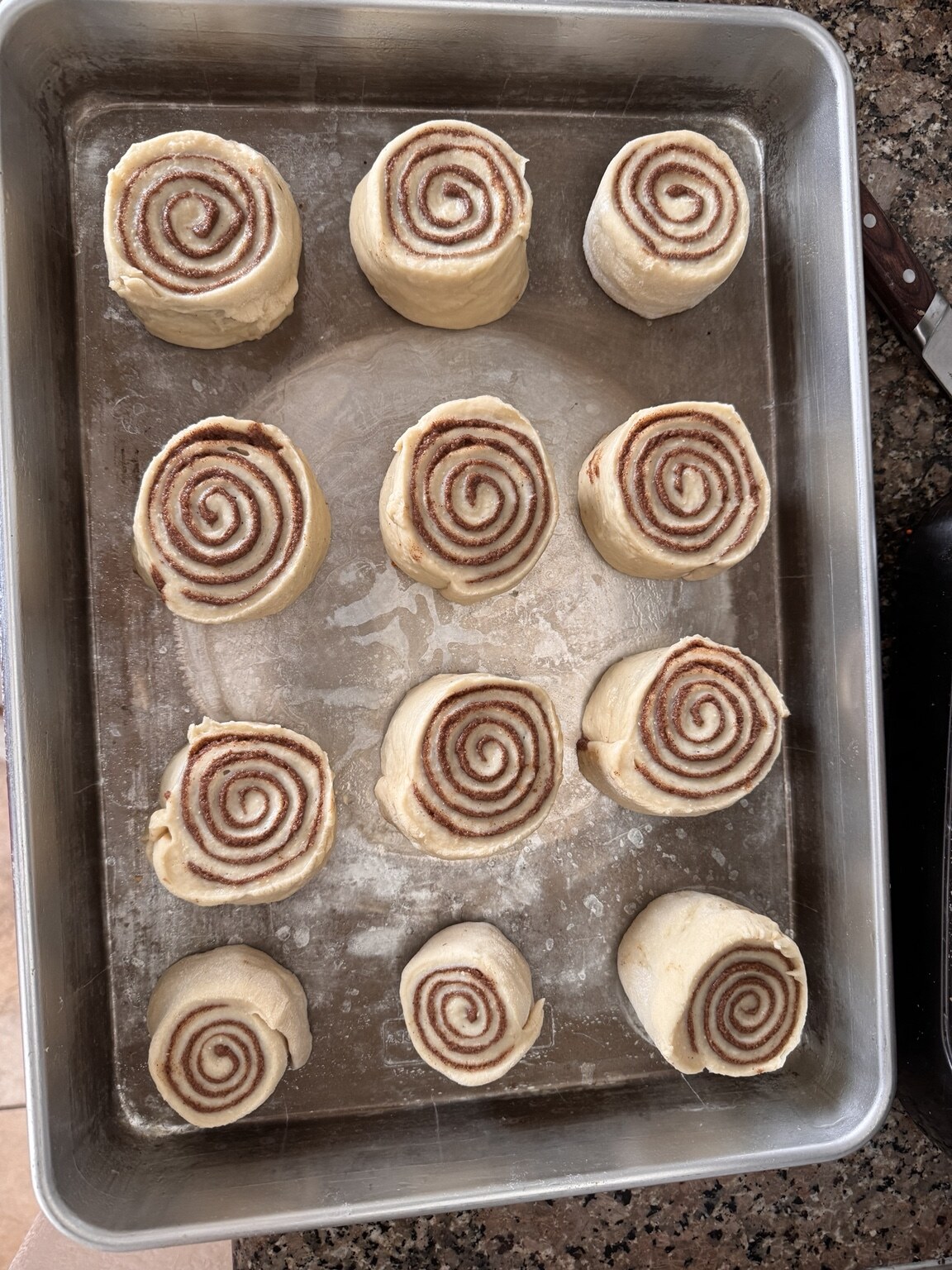
10–15 minSpread the filling over the dough, leaving a narrow border on one long edge. Roll up from the 24-inch edge to form a log about 24 inches long. Measure the log and cut into 12 rolls; at the 12-roll base yield, each piece is about 2 inches thick. Adjust piece width and pan spacing for a different batch size.
Arrange the rolls
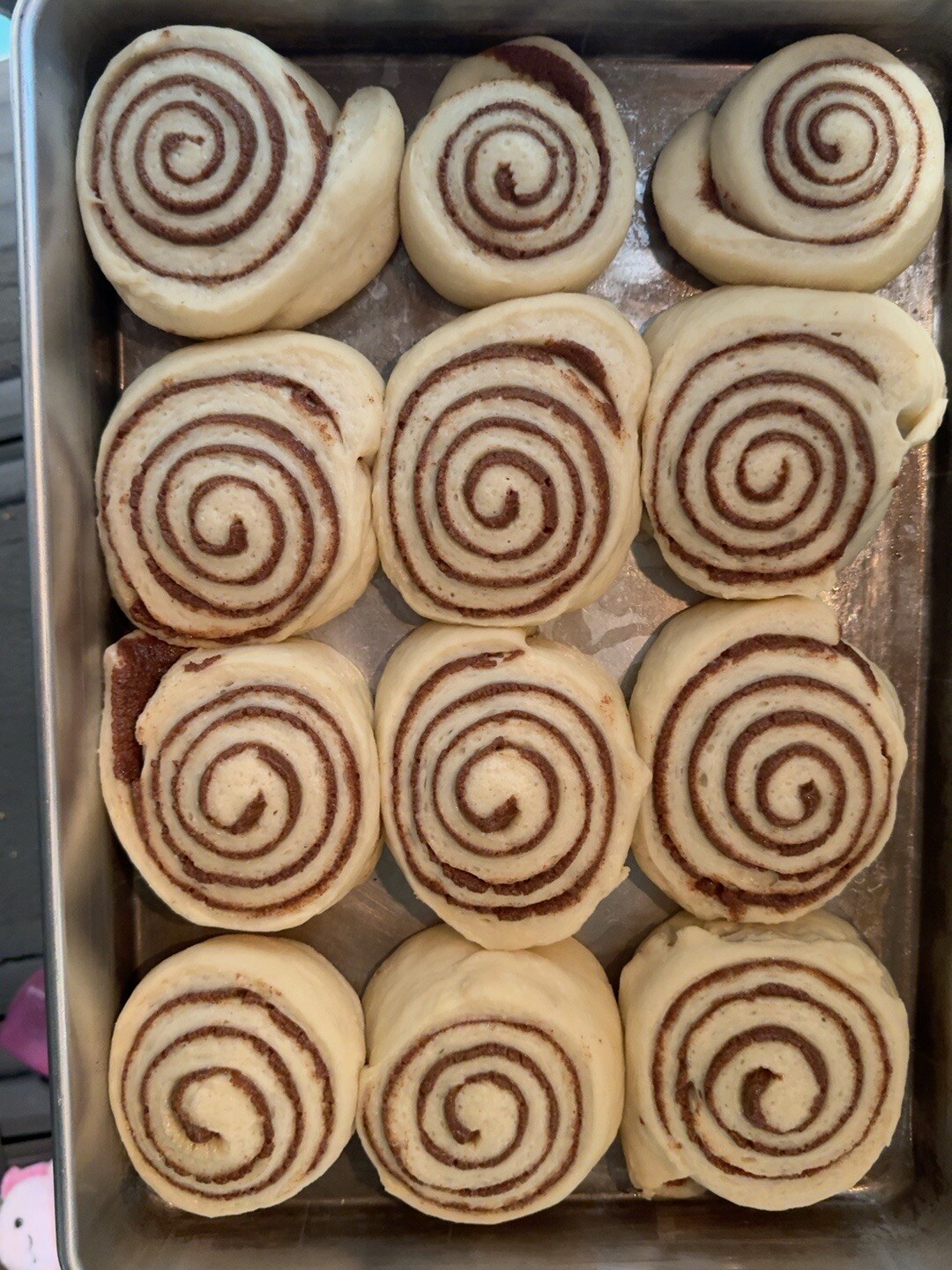
5 minButter a large rectangular pan and leave room for expansion. The photographed batch used one large pan with all 12 rolls arranged about 3 × 4. Alternatively, use two 9 × 13 inch pans with six rolls in each; baking time may differ.
Proof until puffy
About 1–2 hoursCover and let the rolls rise until puffy, the gaps have mostly closed, and the rolls are touching. In the process photos, they began widely separated and finished snugly packed. A gentle fingertip indentation in exposed dough should spring back slowly; they do not need to double again.
Pour on the milk and butter
2 minGently heat 120 g with 14 g in a small saucepan just until the butter melts, around 100–110°F. Do not boil. Slowly pour it over and between the rolls; it is fine if some reaches the tops and pools around the bottoms.
Bake, shielding the tops
Start checking at 20–25 minIn the tested hot-running oven, bake at 315°F. Put a cookie sheet on the rack above the rolls as an initial heat shield, leaving clearance for airflow, and rotate the pan halfway through. Start checking around 20–25 minutes. If the tops are getting too toasty, carefully place another cookie sheet over the baking pan like a loose tent without pressing into the rolls. The tested batch was removed shortly afterward at just over 190°F inside; the exact total minutes were not recorded. Probe the bread portion of a central roll, avoiding the cinnamon filling, and aim for about 190°F / 88°C. Use internal temperature rather than the clock as the deciding factor and watch the tops closely. The 315°F setting is specific to this oven; a calibrated oven may need a different setting or time.
Cool briefly
10–15 minAllow the rolls to cool for about 10–15 minutes before frosting, so the icing softens without disappearing completely.
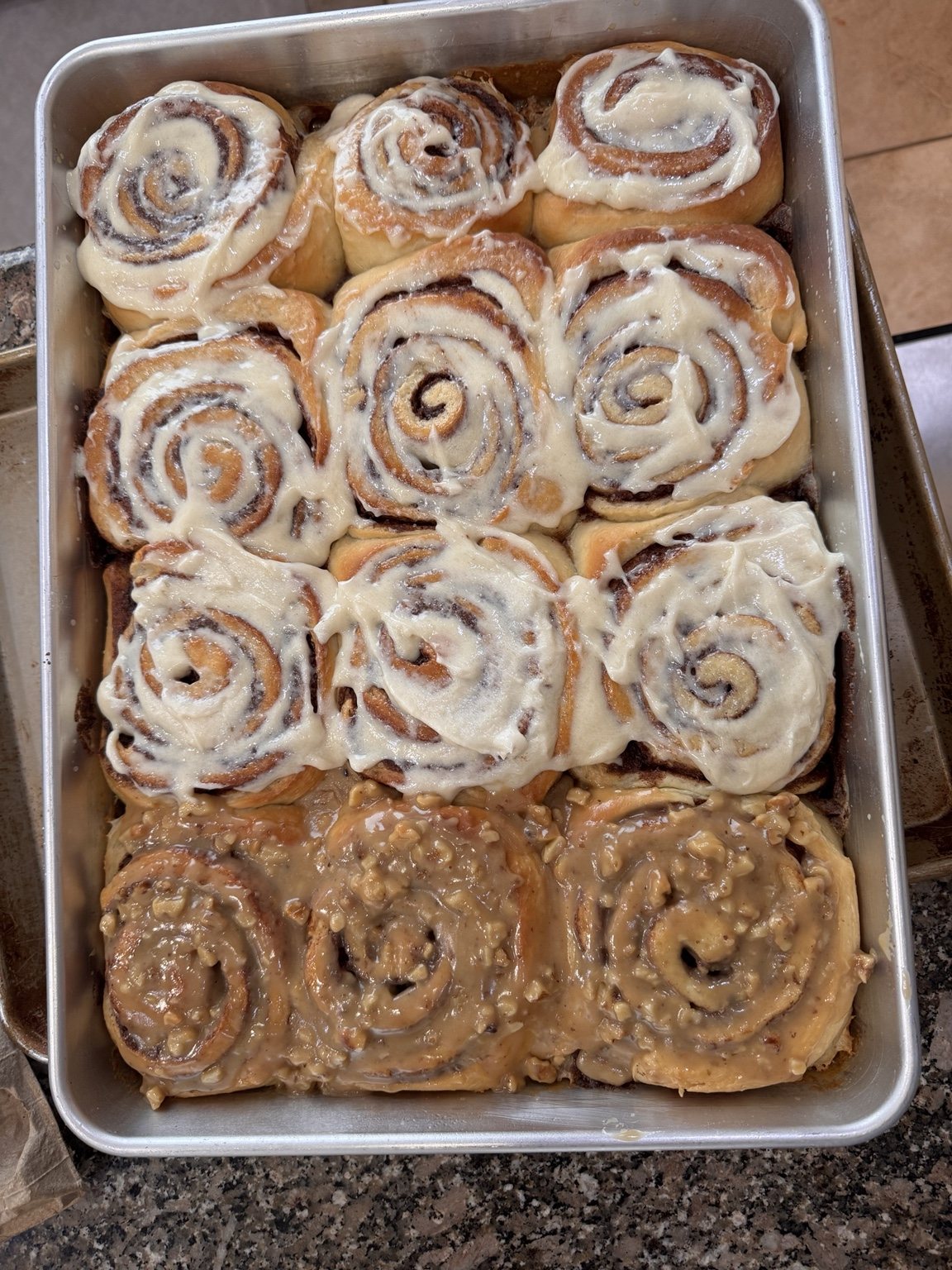
Finish half with vanilla cream cheese frosting
5 minBeat 113 g with 42 g until fluffy. Beat in 90 g, 5 g, and 1 pinch. Thin with 15–25 g until spreadable, then frost half the rolls.
Finish half with brown-butter caramel walnut glaze
10 minToast 85 g in a dry skillet for 3–5 minutes, then remove. Brown 56 g in a saucepan until fragrant and golden. Reduce the heat and carefully add 55 g and 35 g; stir gently for 1–2 minutes until smooth. Remove from the heat, cool 3–5 minutes, then whisk in 60 g, 5 g, and 1 pinch. Thin with a small extra splash of milk if needed. Stir in most of the walnuts, glaze the remaining rolls, and scatter the reserved walnuts on top.
From my kitchen
Notes for next time
Show notes
From my kitchen
Notes for next time
Tangzhong texture
Cook it until very thick, closer to stiff mashed potatoes than pourable pudding. Scrape it with a rubber spatula, spread it thinly on a plate, and cool until just warm.
The dough stays sticky
The dough remained noticeably sticky and still worked well. Sift a small amount of flour over the counter instead of kneading excess flour into the dough.
Shape consistent portions
For the 12-roll base yield, measure the finished log to about 24 inches and cut twelve 2-inch rounds. Adjust roll width and pan spacing if making a different yield.
Second proof cues
The rolls started well spaced and rose until puffy and touching. A gentle fingertip indentation in exposed dough should spring back slowly.
Baking and browning
The 315°F setting is for the hot-running tested oven. Rotate the pan halfway, begin checking at 20–25 minutes, use cookie sheets to shield the tops, and use about 190°F internal temperature as the doneness guide. The exact bake time was not recorded.
Keep the milk-and-butter drizzle
The 120 g milk plus 14 g butter, poured over and between the rolls before baking, worked particularly well.
Cinnamon to taste
Use the recipe's 15–25 g range according to how cinnamon-forward you like the filling.
Along the way
Recipe photos
Photos from the cooking process and finished dish.